Parkesburg, PA

Products Steps & Treads
Choosing the right stone steps can transform how people move through a landscape while adding lasting character to entrances, patios, and outdoor spaces. Contractors, masons, and homeowners often seek steps that offer durability, consistent sizing, and natural beauty. Natural stone delivers all three.
Different projects require different styles of natural stone steps, stone walls, or even stone used to produce gravel. Understanding the common options helps buyers choose the right material for both performance and aesthetics.

Bluestone steps are a popular choice for entryways, patios, and landscape stairways because of their strength and clean, consistent appearance. These stone stair treads provide a durable walking surface and can be fabricated into precise sizes for uniform installations. Custom fabrication also allows for bluestone stair treads that fit exact project specifications.
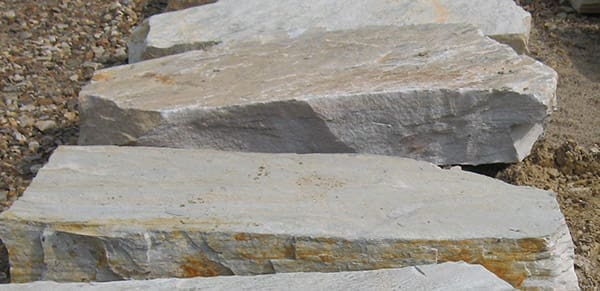
For projects that call for a more natural appearance, quarry stone steps offer a rugged, organic look. These landscape stone steps are typically thicker and less uniform than fabricated stone, making them ideal for garden stairways, hillside transitions, and natural landscape designs while maintaining long-term durability.
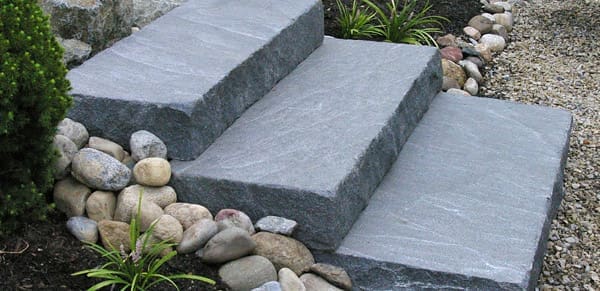
Projects that require exact measurements often rely on natural stone stair treads cut to specification. Custom bluestone cuts allow contractors and designers to match step depth, width, and thickness to architectural plans, ensuring properly sized stone steps for entryways, landscape stairs, and commercial installations.
One area that often causes confusion when selecting stone steps is understanding the difference between full building stone and veneer materials.
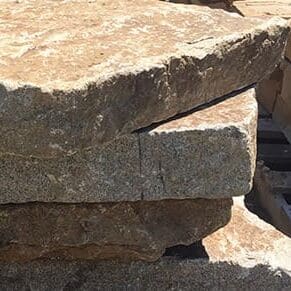
Building stone is a structural material commonly used for stone entry steps, stair systems, and load-bearing applications. Its thickness and durability make it ideal for landscape installations where stability and longevity are essential.
Thin Veneer (approximately 1.5 inches thick)
Thin-veneer stone is primarily designed for decorative wall applications. While it delivers the look of natural stone, it does not provide the structural strength required for landscape step stone installations.
For stair construction and outdoor transitions, contractors typically rely on thicker building stone or fabricated stone stair treads.
Working with a direct quarry supplier offers significant advantages when purchasing stone steps.
Key benefits include:
Direct sourcing also reduces uncertainty around stone origin, ensuring consistent color and performance across the project.
Selecting the right stone steps often raises practical questions about materials, sizing, installation, and the differences between stone options. Contractors may want to understand fabrication details and availability, while homeowners are often comparing bluestone steps, quarry stone steps, and other natural stone stair treads for landscape or entry projects. The following FAQs provide clear answers to common questions to help simplify the selection process and make it easier to choose the right landscape stone steps for your project.
Several types of stone steps are commonly used for landscape and entry installations. Options include bluestone steps, natural quarry stone steps, and custom-cut stone stair treads. Bluestone provides a clean and uniform appearance, while quarry stone offers a more natural, rugged look. Custom-cut stone is often used when projects require precise dimensions.
Bluestone steps are typically fabricated into consistent sizes with smooth surfaces, making them ideal for formal entryways and patios. Quarry stone steps are thicker and more natural in shape, creating a rustic appearance that works well for landscape staircases and hillside installations. No matter your project, we can help with the right steps.
Standard stone stair treads commonly range from 12 to 16 inches in depth, with thicknesses typically 3 to 6 inches for structural applications. Custom sizing is also available, especially for bluestone stair treads used in architectural or commercial designs.
Yes. Many contractors choose natural stone stair treads that are fabricated to specific sizes. Custom bluestone cuts allow steps to match architectural plans, ensuring consistent tread depth and proper installation for landscape stairs or entryways.
Building stone used for stone steps is typically 3–6 inches thick and designed for structural applications, such as stair systems and retaining walls. Thin veneer stone, typically 1.5 inches thick, is primarily used as decorative wall coverings and is not intended for structural step installations.
Yes. Natural stone steps are extremely durable and designed to withstand outdoor conditions, including heavy foot traffic and seasonal weather changes. Materials such as bluestone stair treads and quarry stone steps are commonly used in landscapes for their long lifespan and strength.
Proper installation is important for stability and safety. Most landscape stone steps require a compacted base, proper drainage, and consistent riser heights. Contractors and masons often select thicker stone stair treads to ensure long-term durability.
Yes. Bulk materials such as stone steps, natural stone stair treads, and other landscape materials can typically be delivered directly to job sites, helping contractors and homeowners coordinate installation timelines.
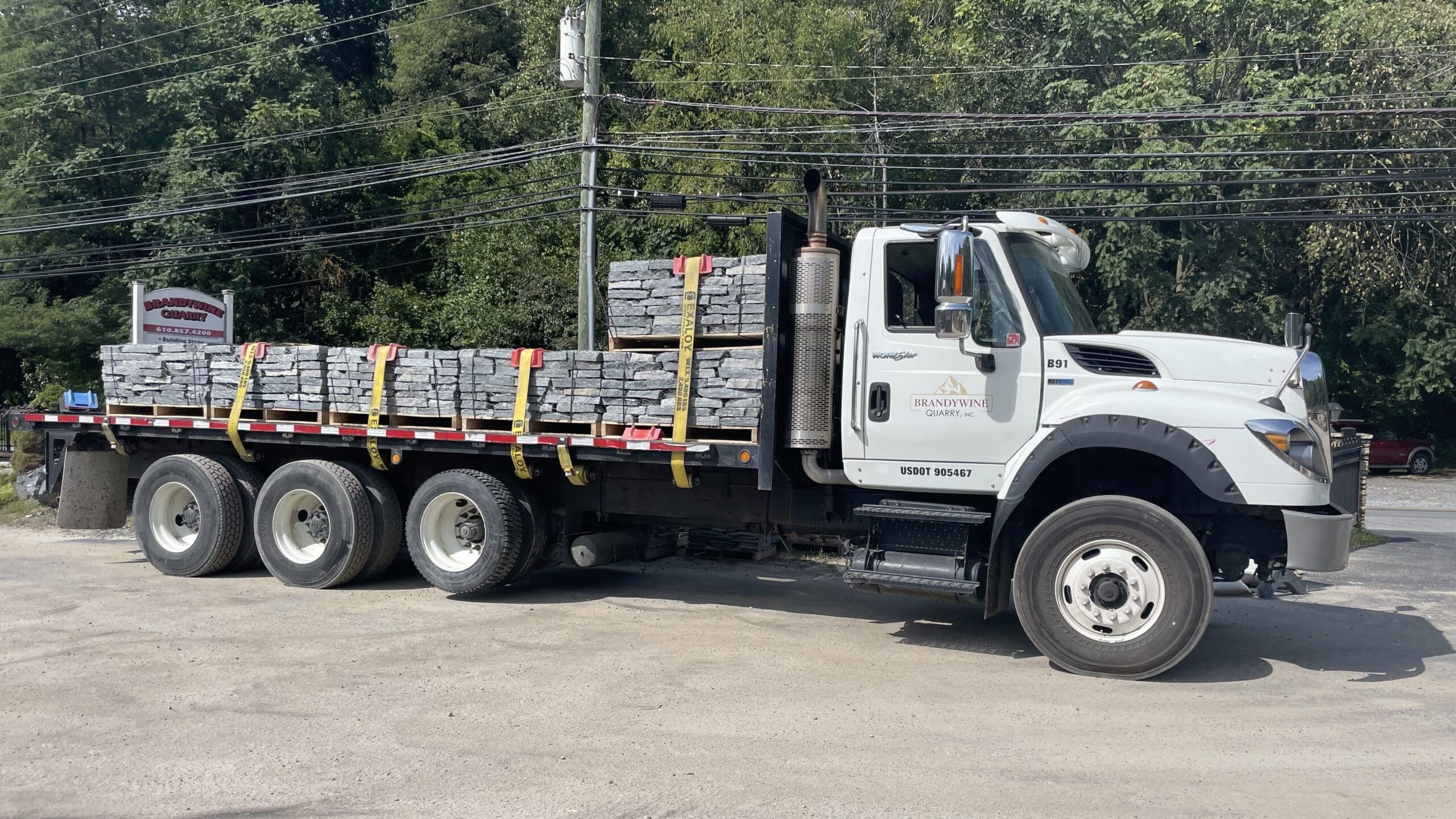
Reliable logistics are an important part of any construction or landscape project. Bulk stone materials must arrive on schedule and in proper condition.
Delivery services allow contractors and homeowners to receive stone steps, bluestone steps, and other landscape materials across the Tri-State region. This makes it easier to coordinate material delivery with project timelines and installation schedules.
Proper sizing is essential when installing natural stone steps. Contractors typically consider several factors when selecting materials:
Many projects use bluestone stair treads because they can be cut to consistent sizes, simplifying installation while maintaining a natural appearance.
Landscape designers also often combine quarry stone steps with retaining walls or natural grade changes to create functional outdoor staircases.


